Anne Frank House
You may possible of heard the name Anne Frank at some point, this is a woman who is considered brave and outstanding, who hid from the Nazis in a hidden part of a building in Amsterdam. The house is located on the canal of Prinsengracht in the centre of Amsterdam.
It was in 1940 that her father Otta Frank made the decision to move his office business into Prinsengracht 263 which became known as Anne Frank’s house. Anne along with her family and 4 other people hide at the back of a house through a bookshelf, which was known as the secret Annex. She was not known at the time, but it was her dairy that she writes while hiding that was published in 1947 which made her a well-known name and writer.
Our tour
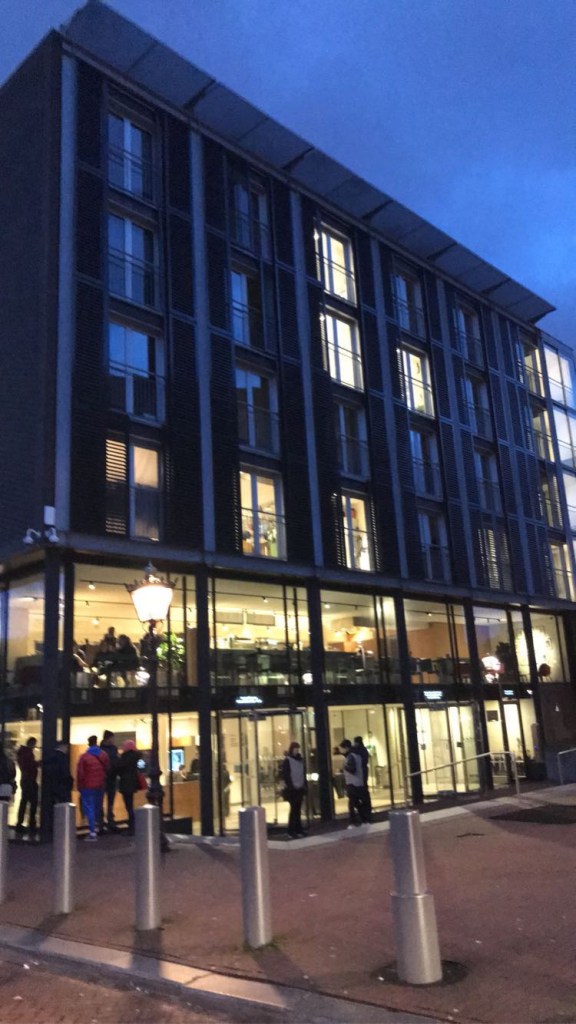
We arrive at the entrance to the museum, you can see straightaway some of the builds had undergone major development for the purpose to be made into a museum, as it was a glass front and check in desks, we had skip the line tickets, you should book your ticket well in advance as they do sell out quickly. We was told that we needed to wait outside for our tour guide, when our guide arrive he took as in through a side entrance and allowed us to leave our bags and coats at a desk, we was then taken into a room that was like a class room, he explained that he would tell us some information before taking a tour of Anne Franks house, this is because he would not be able to explain everything when going around as we would have limited time to see the house because of other tours. The classroom had a small wooden scale of the house and how it would have looked, along with a timeline which he went through of Anne and her family’s life.
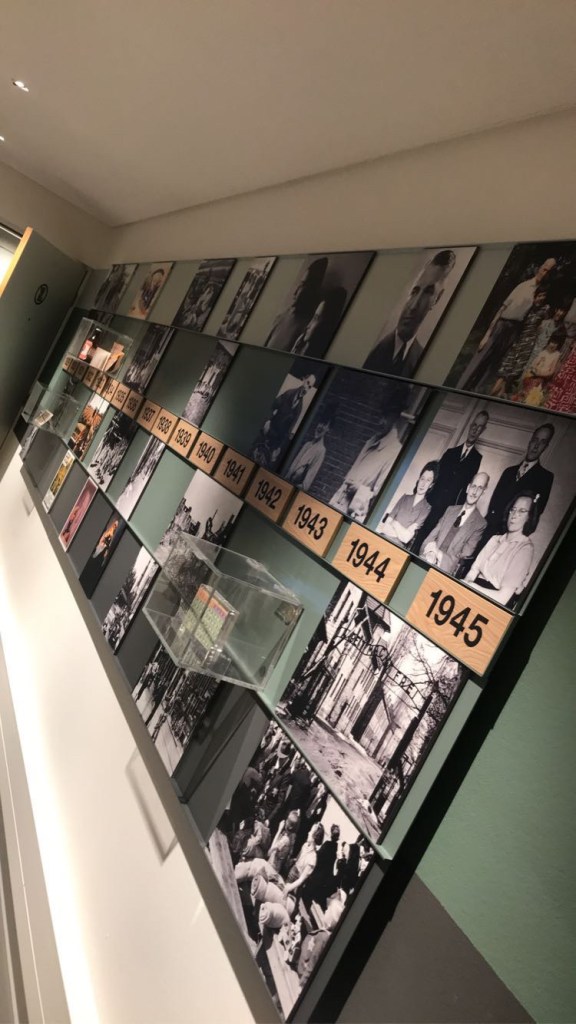
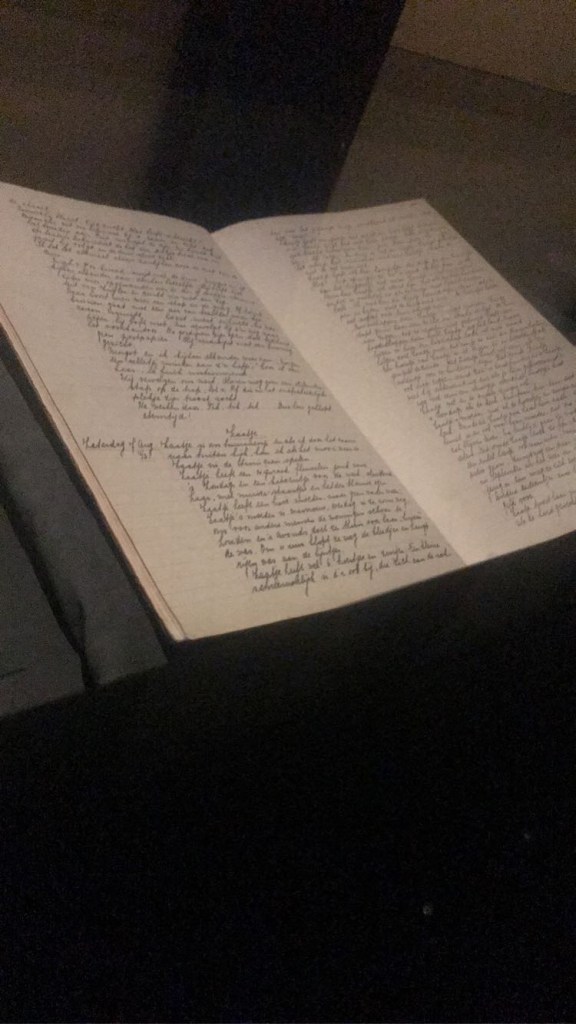
We were told before entering the house that Anne stayed with in the secret annex for 2 years and a month before the Nazi found their hiding area, they were later arrested and they were all sent to concentration camps, her father Otto Frank was the only surviving person. It was Miep Gies and Bep Voshujl that helped in hiding the family and who also retrieved some family belongs from the property, one of these being Anne Frank diary’s, which you are taken to these downstairs after visiting the house, which inside glass cabinets.
We were given a self-auto guide with earphones for when you are going through the house, each room has a sticker that you scan in each room that explains different parts of the building from Anne dairy.
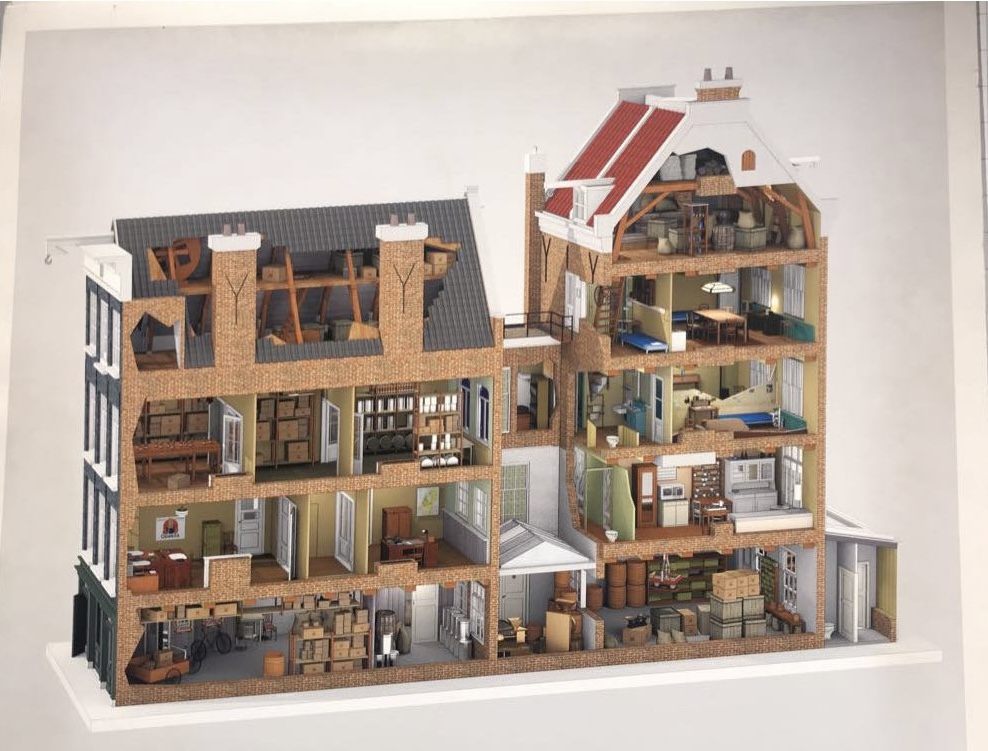
When entering the house he explained the different levels of the house, the ground floor which was used for a goods and package entrance which we entered first, behind this was the spice and mill section, it is above the goods entrance area where the secret Annex was located. The upper floor was used as an office area, he told us how they used one of the office radios to keep up to date with the outside world and they were only able to tell the time from the clocktower that was near the house from the bells ringing. Throughout the house the steps are very narrow and steep like most the of buildings throughout Amsterdam.
The secret Annex which was part of the house was concealed, from the inside and the outside, the outside was concealed from view by other houses and on the inside you could only access it by moving a book case which was the entrance, we made our way through here and up a very steep ladder which leads up to the living area, it was explained to us from our guide about the living room as well as about the curtains needing to remain shut with in the whole time they was their because of other homes surrounding the building. We made our way into the bedroom area the only thing that remained was stickers that Anne and her sister would have put on to the walls with in there stay. There is no furniture as this was all take when Nazi found the hiding place, but you still get a understanding how small the living area was, from here we went into an area which would have been a washroom, it was explained to us that they would have not been able to use water throughout the day because of the workers under them hearing them, which would have been the goods and package area.
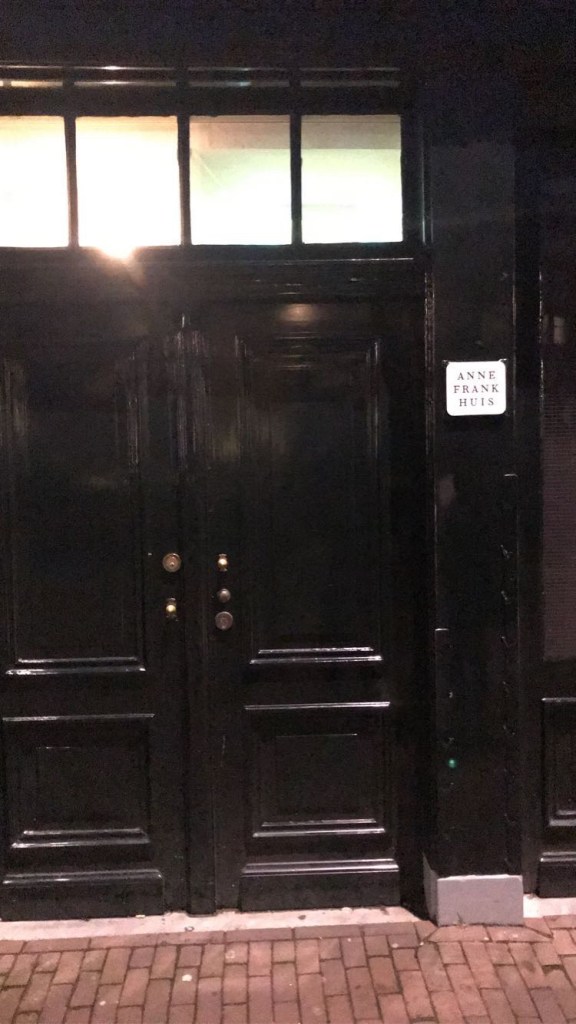
It was not to we left that we released the visitors entrance was not part of the actual building of Anne frank’s house but redeveloped to be used as an entrance, the entrance to the actual house is little black door to the lefthand side of the visitor’s entrance, with a sign saying Anne franks house.
The experience is very moving, from visiting this place it gives you understand of what Anne lived like for 2 years of her life, thinking that the only friend she had to share her thought with was her dairy, this would have been only thing that helped her throughout her hiding and brought her comfort. I would say that if they were replicas of furniture through the annex it would of given it a better experience as you would have got better understanding of the living conditions, but you still get an experience of how it must have felt like from hiding and only hearing parts of the outside world like aircrafts and bombs dropping.
The Waag Amsterdam
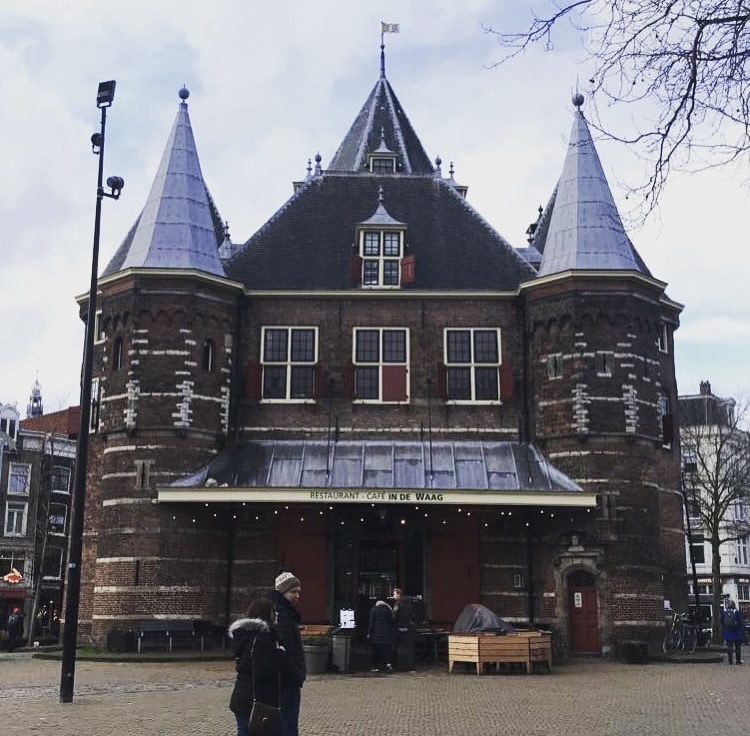
There is not much information about this, and if you walked past you wouldn’t think that it was very significant, it was built as a city gate in 15th century which was part of a medieval wall that surrounded Amsterdam, it was in the 16th century that it lost its purpose as the city expanded. However, it was used to keep the sickout and the poor. It has also been a museum, fire station and anatomical theatre. However, I consider it a Dark tourism attraction as it was a well-known site for public executions to take place.
 Dark Tourism Destinations