Milan
San Bernardino Alle Ossa
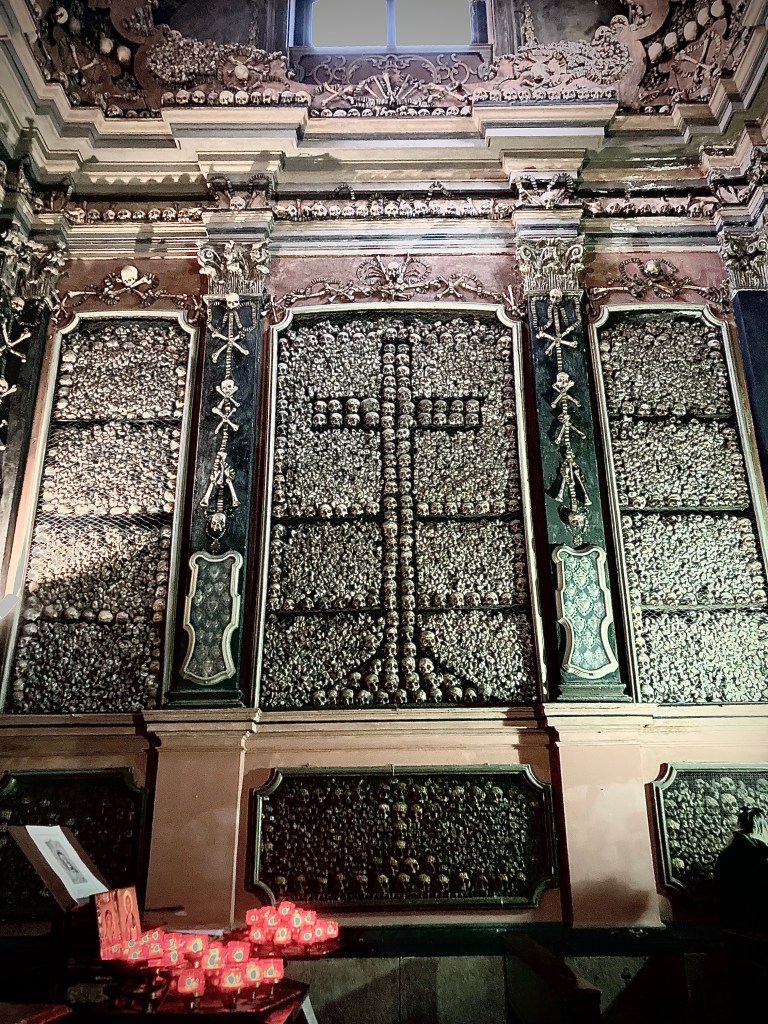
This Ossuary is more of a peaceful visit than other bone places, it is a small room within a church which is located to the right when entering the church, all four walls from ceiling to floor have been covered in bones, it is not big display, however it is the resemblance to the ossuary with in Evora Lisbon that is intriguing as in 1738 the King of Portugal Giovanni V. Took the idea from San Bernardino Alle Ossa and wished one to be built in Portugal.
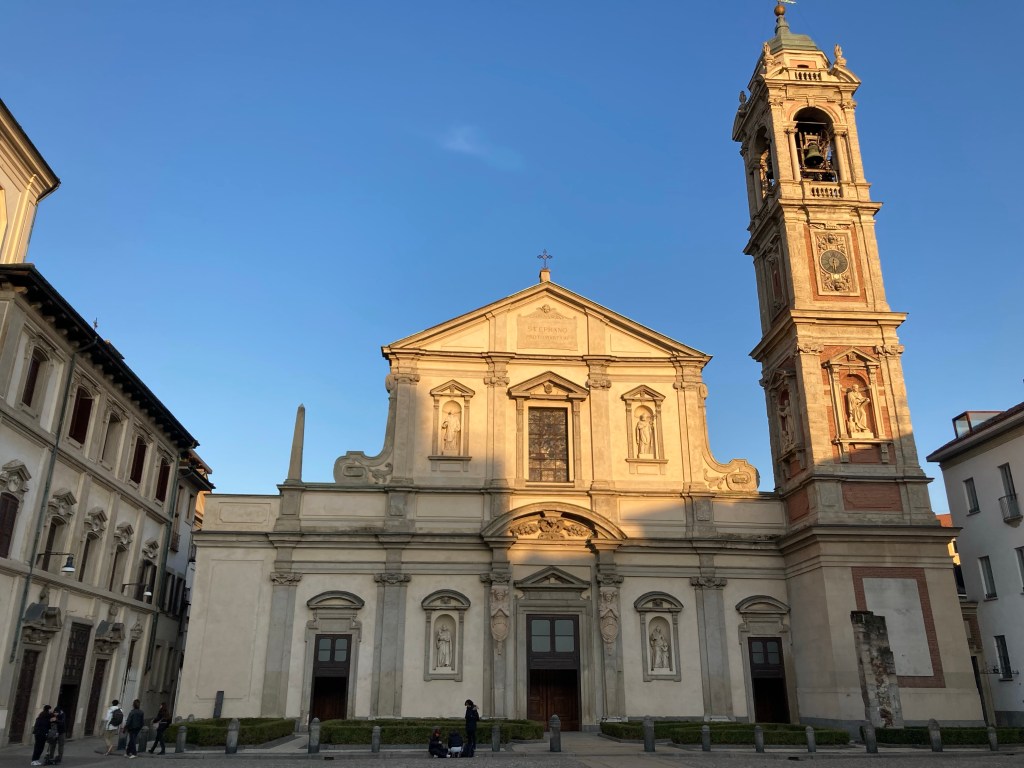
The ground of where the church sits was a cemetery in 1145 for the hospital that was nearby, however space became limited and in 1210 a building was built at the bottom of the cemetery to have bones unearthed and place them within this building, then in 1268 a church was built along side this.
In 1642 the bell tower that was located near the church and ossuary collapsed destroying the ossuary and church. And the charnel house was rebuilt in 1695 and is the still the same one today.
It was in 1750 that the decision was made to build a new ossuary with a bigger church, which is the one that is present now.
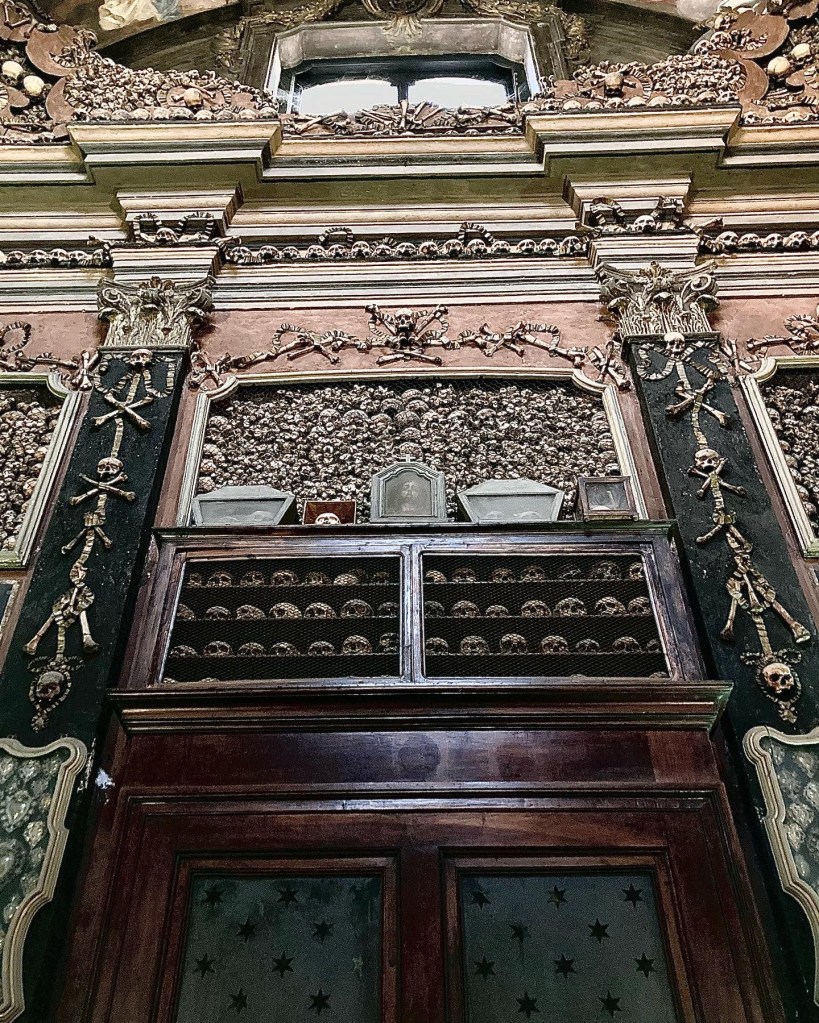
The bones that are with in the Ossuary are mainly poor people who died of natural causes, there is some skulls of people who died of violet deaths, through beheading from acts of theft and violence.
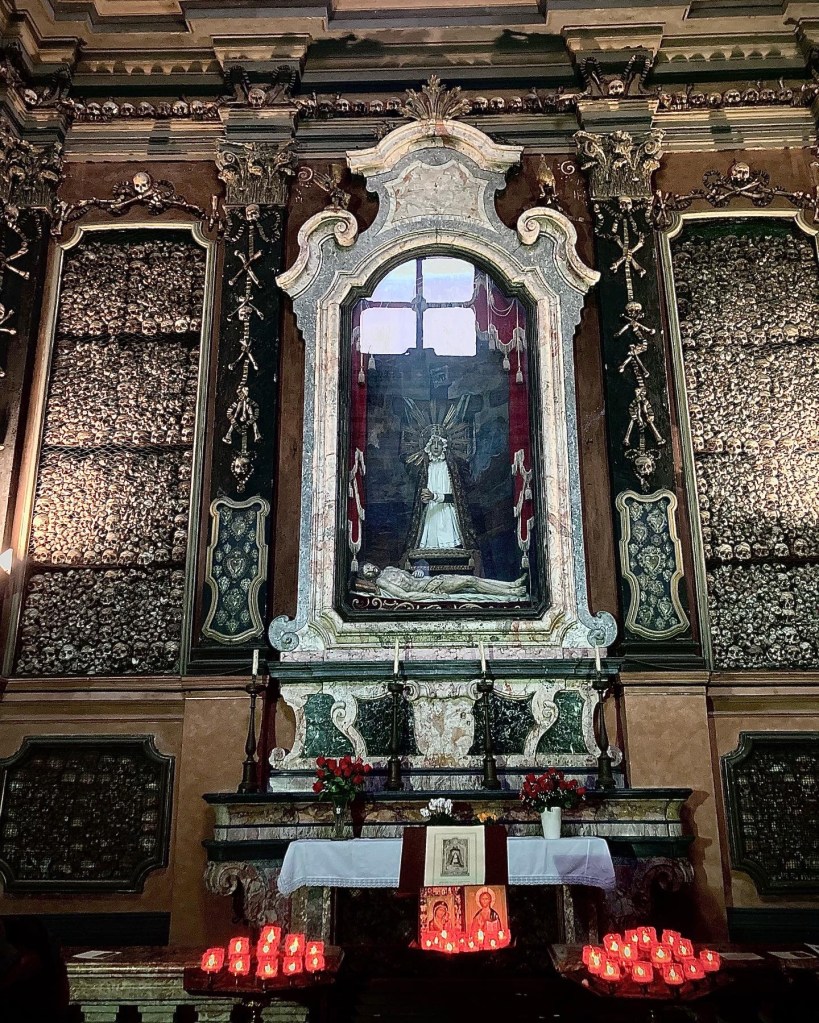
Within front of the main alter with in the ossuary there is a hidden area, you can see steps leading down, which leads into a larger crypt, this is the tomb of Disciplines. However, the steps are uneven, and is not accessible.
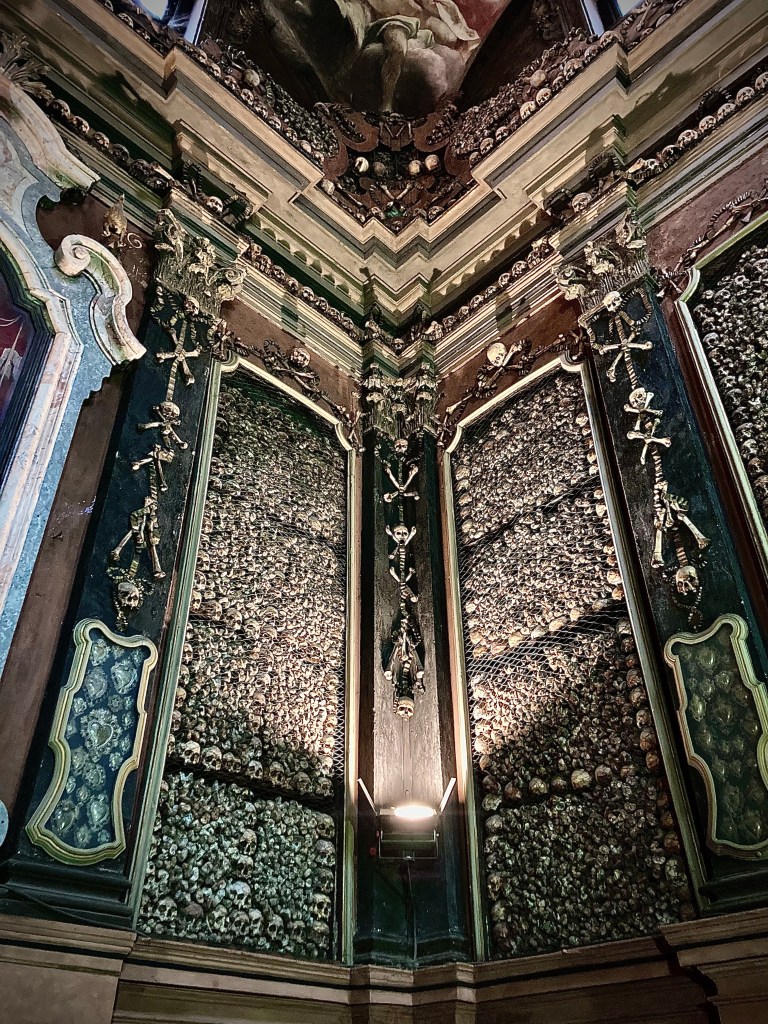
It is worth a visit if you are in Milan as it is a unique and unusual piece of history, and if you have visited other bone places then it is nice to see the similarities from each place along with each one having their own fingerprint.
Monument cemetery of Milan
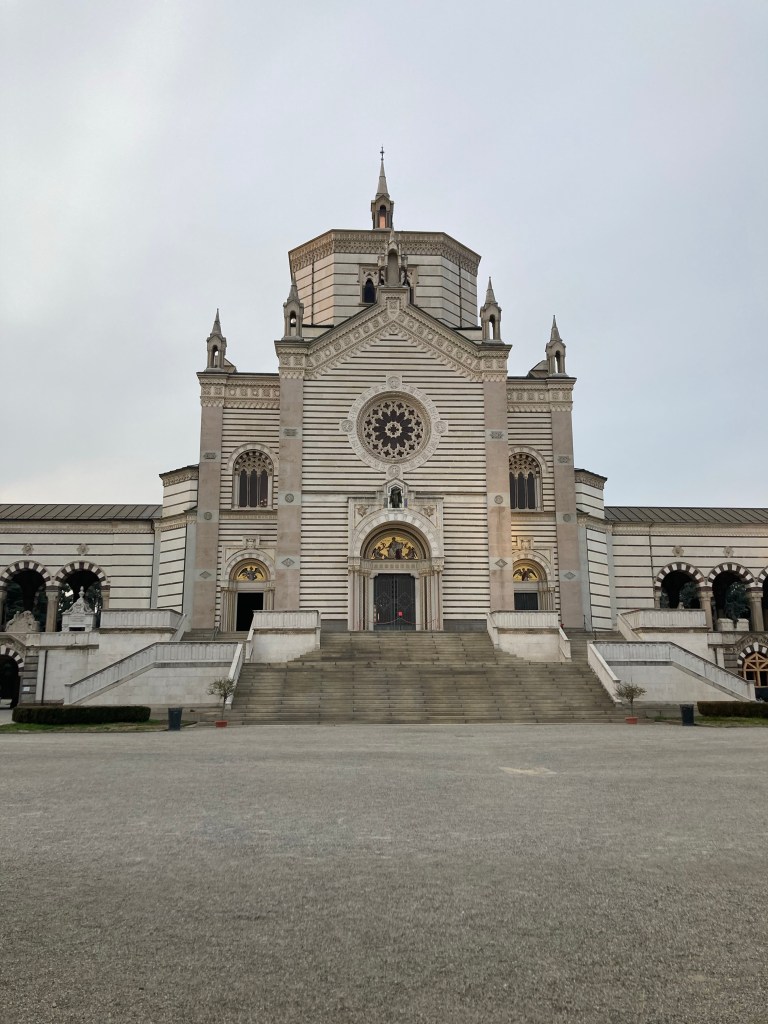
the Monument Cemetery is an outstanding display of architecture wonder, there is a clue within the name the graves are like standalone monuments. The cemetery opened in 1866 because other cemeteries becoming overfilled meaning lack of carer was being given to burials, it was designed by Carlo Maciachini, there is several influential people who are buries with in the cemetery, where several of the roads and metro stations in Milan have taken their names from.
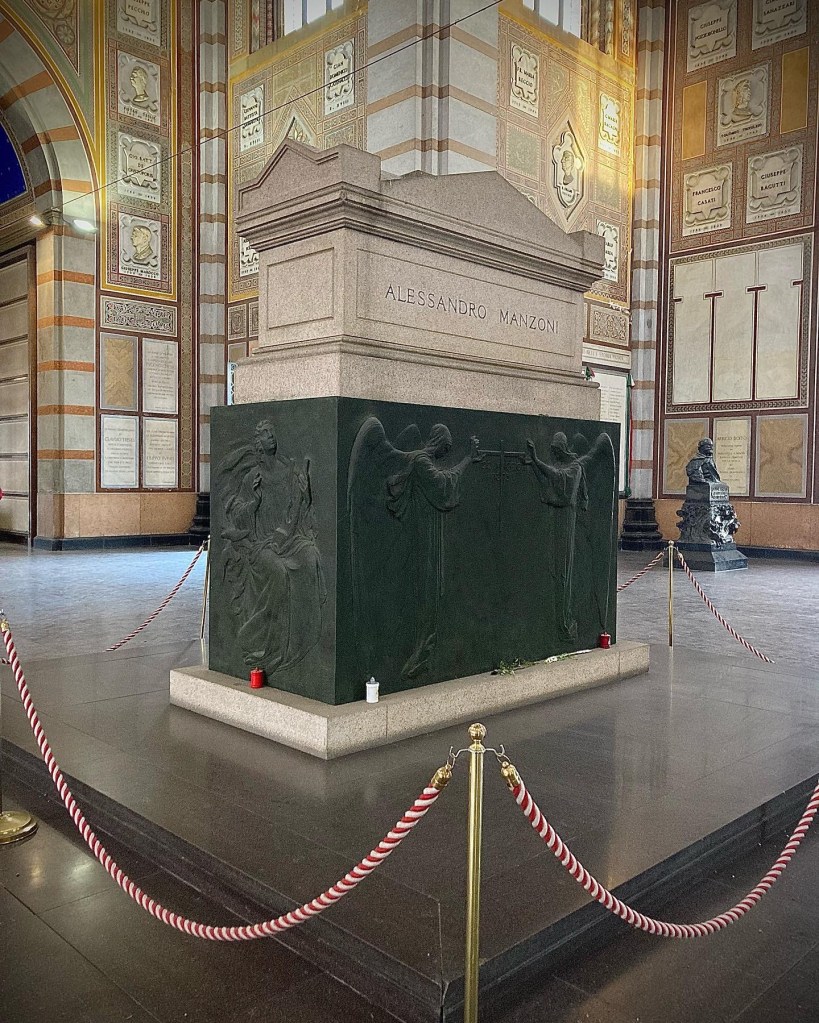
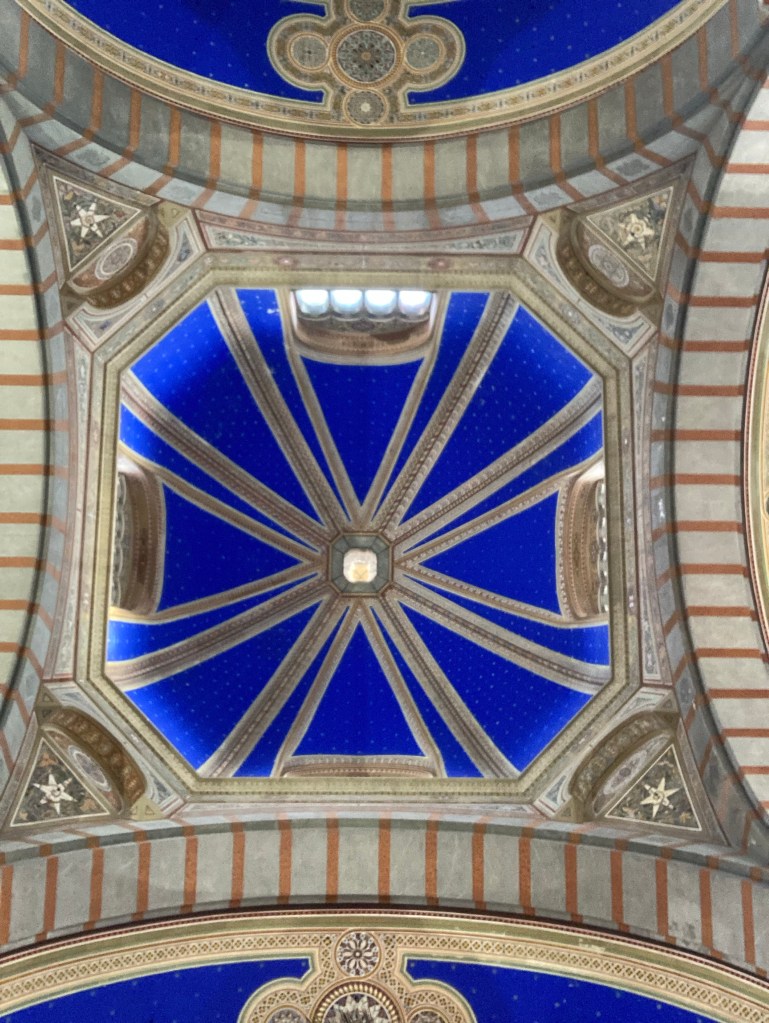
The most well-known person tomb is Alessandro Manzoni who was a well-known writer of the 19th century, his tomb has been placed with in the entrance building which is known as the “Hall of Fame” the room is adorned with large gothic windows and a royal blue ceiling that you can’t help to admired.
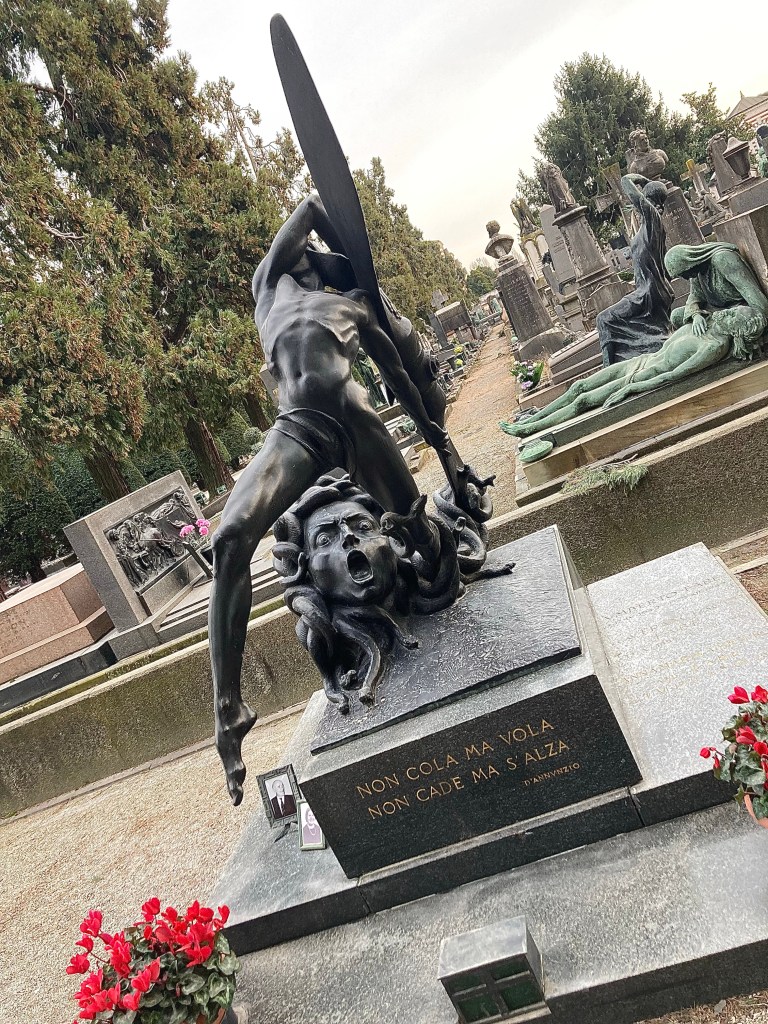
Throughout the whole of the cemetery the tombs are an architecture and artist achievement, some of the tombs appear as a monument to the dead, some of these taking stories such a Medusa or the stations of the cross, or forms of pyramid shapes, however each one is unique with in its own right.
Our tour
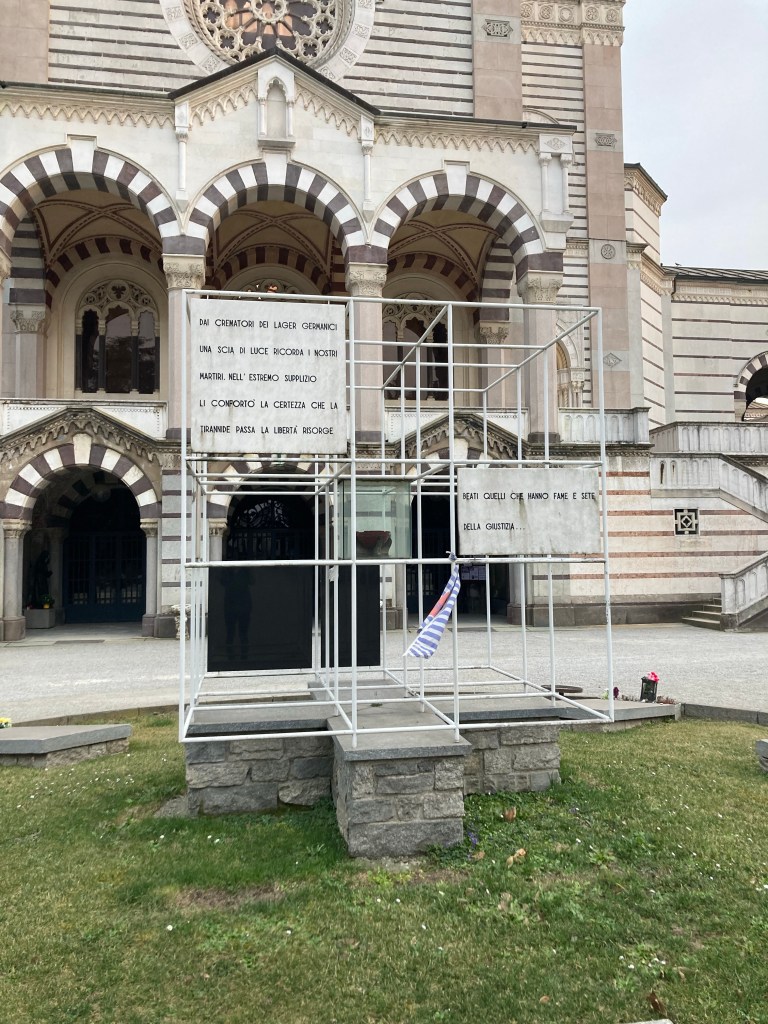
When me and my partner first arrived at the cemetery, and from the outside you would not consider it a cemetery as it as more of a grand entrance, it not to you walk through this that you enter the cemetery grounds, and you are taken back straight away from the towering architecture. There are 3 direct routes coming of a metal cube designed memorial of the Italian Jews who lost their lives in concentration camps. We made our way to the right of the memorial this area had more tombs of roman architecture , some of these had their doors open which you could enter however the burials was places with in the ground which was sealed by metal bars but you could see through a ladder leading down to another room.
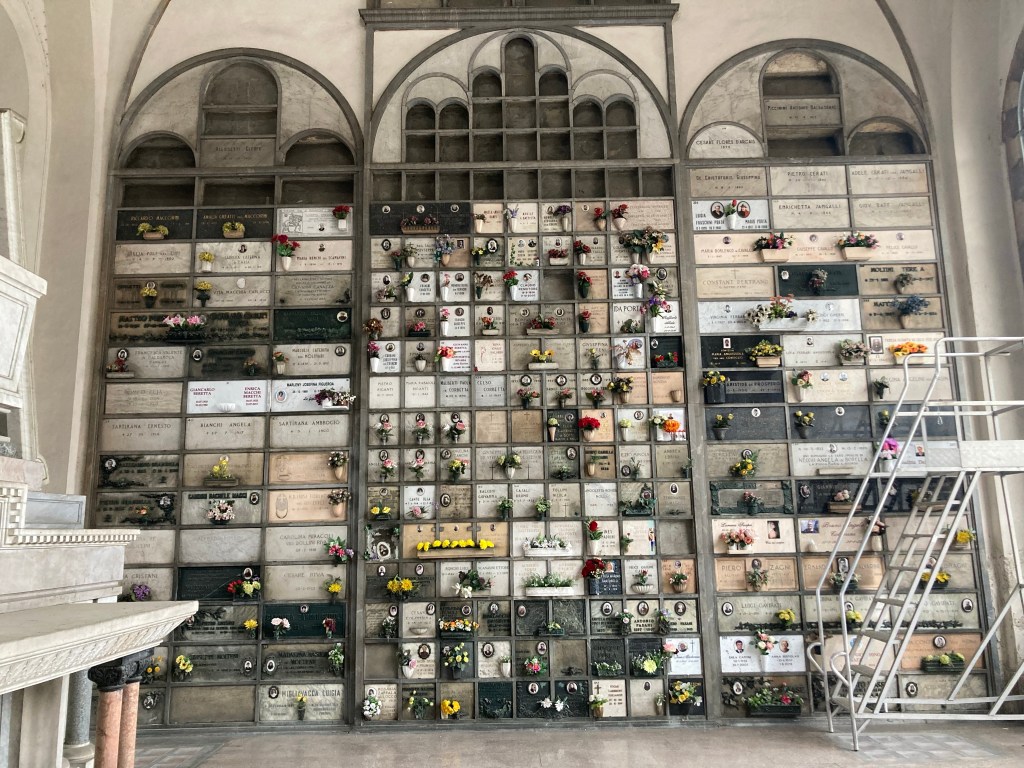
We then made our way around to see a number of different graves of knights being symbolized, the one that took me by surprise was the head of Medusa and a warrior this leads you to think that from the design of each grave is this meant to show the persons personality, we then made our way around which lead us to the central point of the cemetery which you could see the Hall of fame by the direct central path, however we explored a small building which is located in the centre, this held more people who had been cremated and placed in a walls in square boxes which was in style of gothic windows, you could tell that it was still in use from ladders being to the side of the wall and spaces still available.
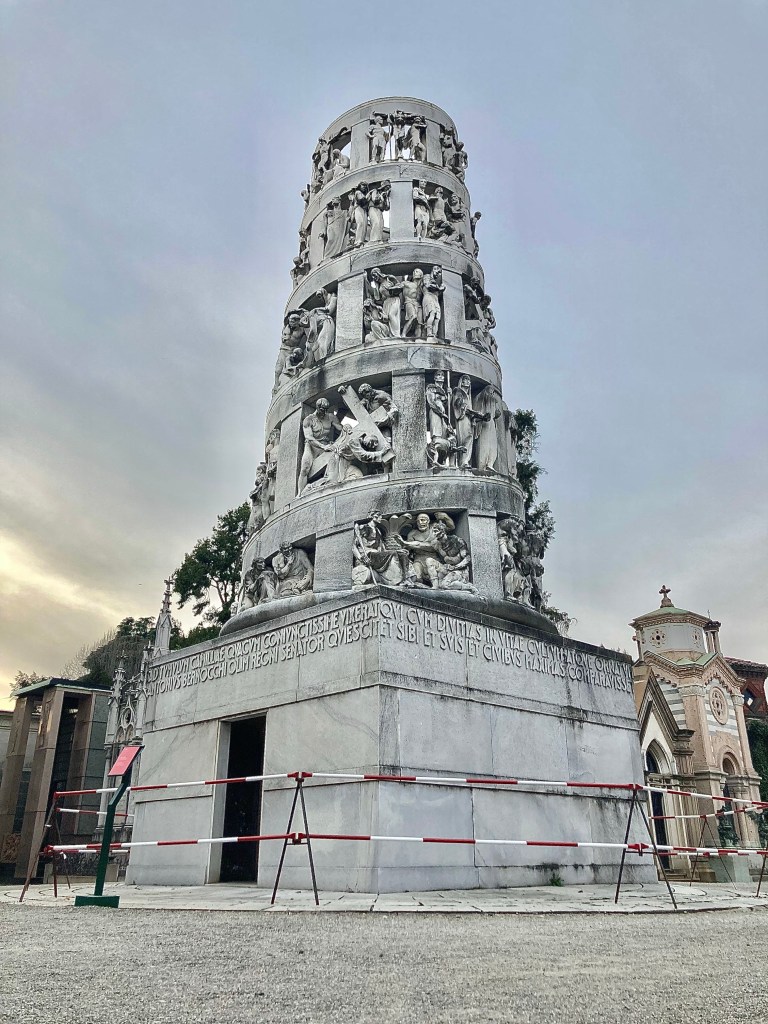
Behind this chapel like building stood properly the most outstanding piece of architecture which is meant to show the tower of Babel with the scene of the stations of the cross. It was a very big statement piece for a cemetery, and I would have considered this to be a monument that you would see elsewhere. Making our way to the back of the cemetery there was another cremation building which had an old cremation fire that would have been used for the dead, I felt this was very strange to see possible because I have not seen anything like this before and didn’t realise how small the spaces was. We did make our way around to the right side of the cemetery which was more low-key graves however still unique
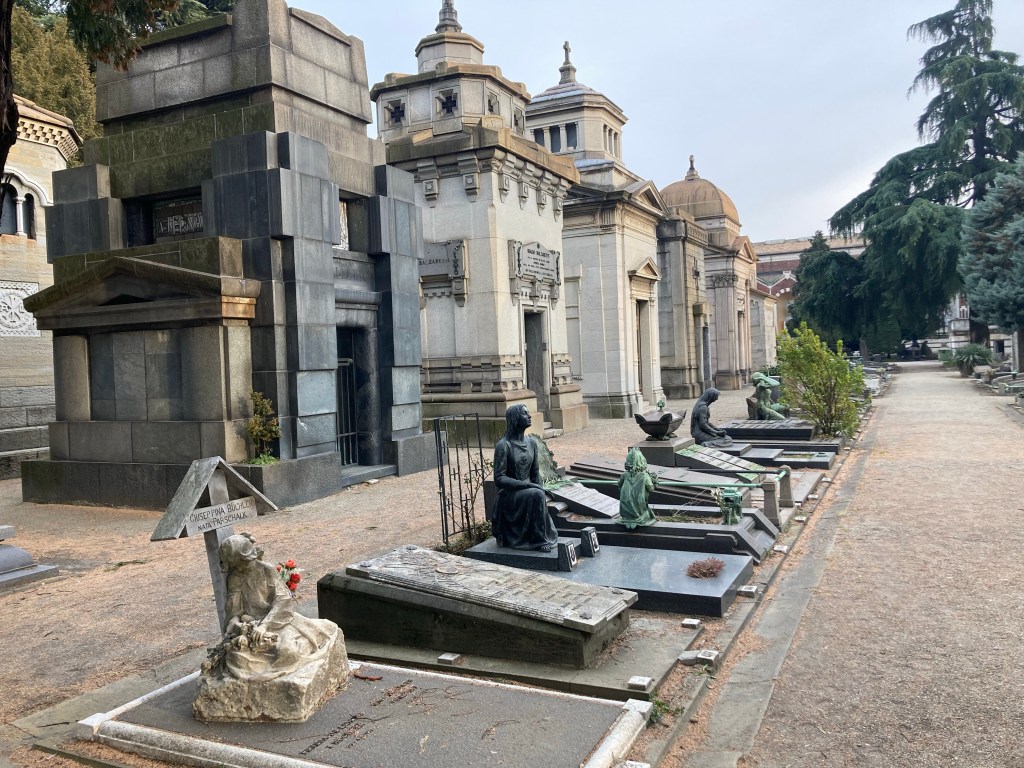
It was not to I write this that I thought that it wasn’t the people buried there that interested me or my partner but the extravagant tombs that had been designed for individuals/families. It is not a cemetery that you can compare to any other, it is definitely worth a visit in when in Milan however I would surest in making sure you have enough time to look around as there is lots to see, you will be given a warning by a siren that can be heard throughout the cemetery warning you that it will be closing
Please do find more pictures on my Instagram account, I have to many to post within this blog post
Milan Duomo
Saint Bartholomew was considered as one of the Twelve Apostles of Jesus, he travelled to the east and then to Greater Armenia, it is said that when he was in Greater Armenia his skin was flayed and he was beheaded for trying to convert the king to Christianity. He is normally represented with his skin flayed or beheaded.
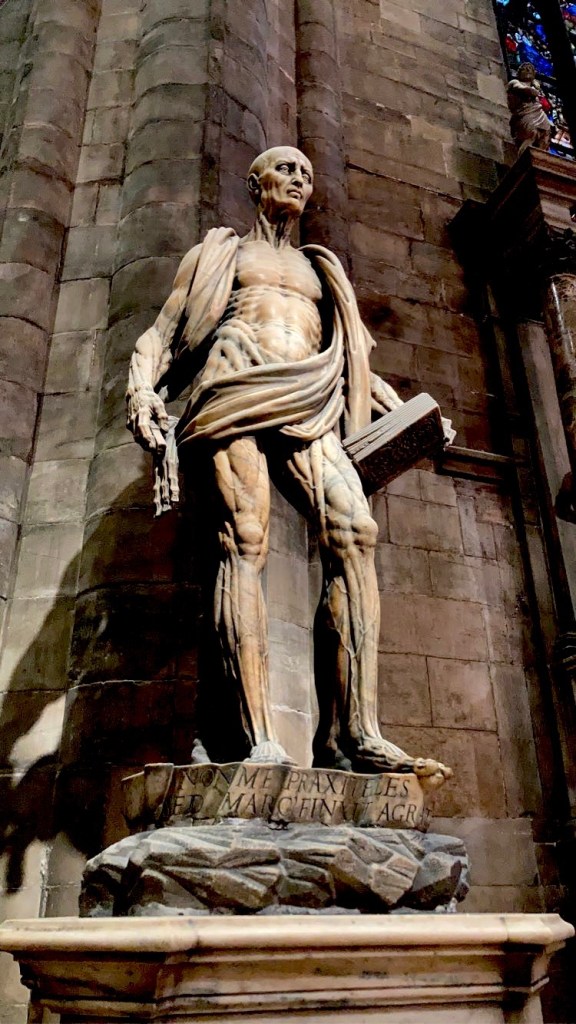
The Statue that stands with in Milan Duomo, which was designed by Marco d’Agrate in 1562, it is seen as one of the outstanding pieces of artwork within the cathedral, this is because he is wearing his skin which has been wrapped around him like a cape, exposing his muscles and bones.
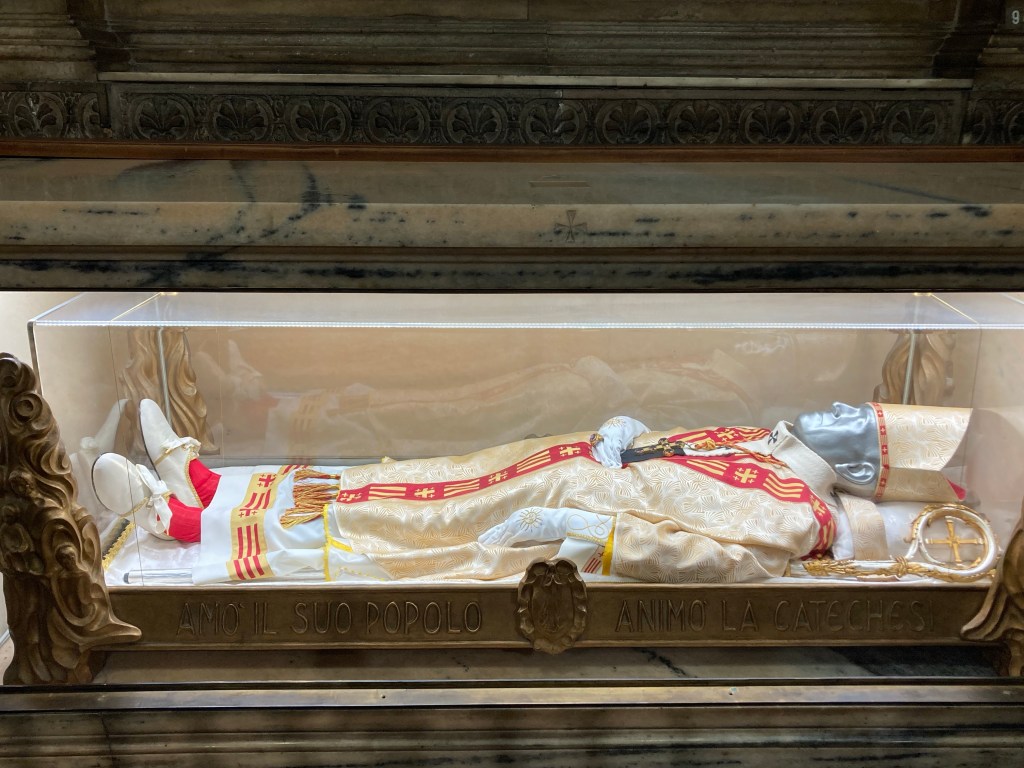
There is also few priests that have been laid to rest with in the duomo, these are not the most fascinating thought thing to see with in the cathedral however it is still interested to see how they have been laid to rest in glass coffins.
Our tour
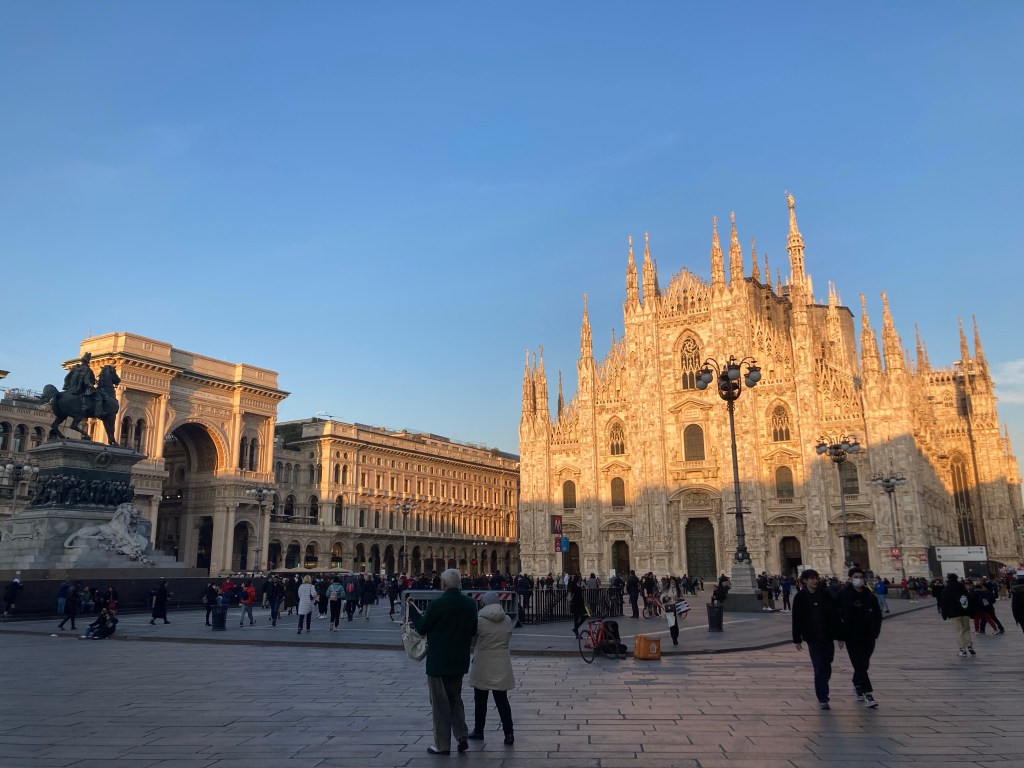
Our trip to the Milan Duomo was firstly very easy to get to as it has its own metro station which takes you right outside of the cathedral and on to the square. We had access to all areas of the cathedral and booked our tickets in advance online, if your ticket start with roof access then you do need to make your way around the back to start your tour, you will be able to take a lift that will take you to roof. It is very interesting to see the architecture up close and you get to see how much detail has gone into the cathedral, you also are able to see the centre of Milan from a different view. When making you way down to the ground floor you will take a spiral staircase, this will lead you to the main alter, which is where Saint Bartholomew is located to the side of the alter.
The inside of the cathedral is adorned with stain glass window that let in a splendour of colour, we explored a number of priests that had been laid to rest around the cathedral which was interesting to see, our last bit we explored was the archaeological area that is located at the front of the building down stairs, this is the reminiscence of the Basilica of Santa Tecla which was built around 350 and demolished 1458 which and Baptistry of Saint John, was built around 387 and demolished in 1394, it was very interesting to see this area under the cathedral as it is like ruins and it takes you back in time to what used to be on the site of the cathedral.
The Milan Duomo is the main attraction to see when in Milan and is worth visiting all the areas of the cathedral, the cathedral is not like any other cathedral we have explored before I would say that it is the unique and outstanding architecture that makes it stand out from any other cathedral, I would even go as far to suggest that I would spend more time here exploring than exploring the Vatican.
Rome
Rome being the capital city of Italy holds some outstanding sights to see and archaeological wonderer, however their is a side to Rome that people don’t perceive as a dark destination or have over looked attractions when visiting Rome.
The Roman Colosseum
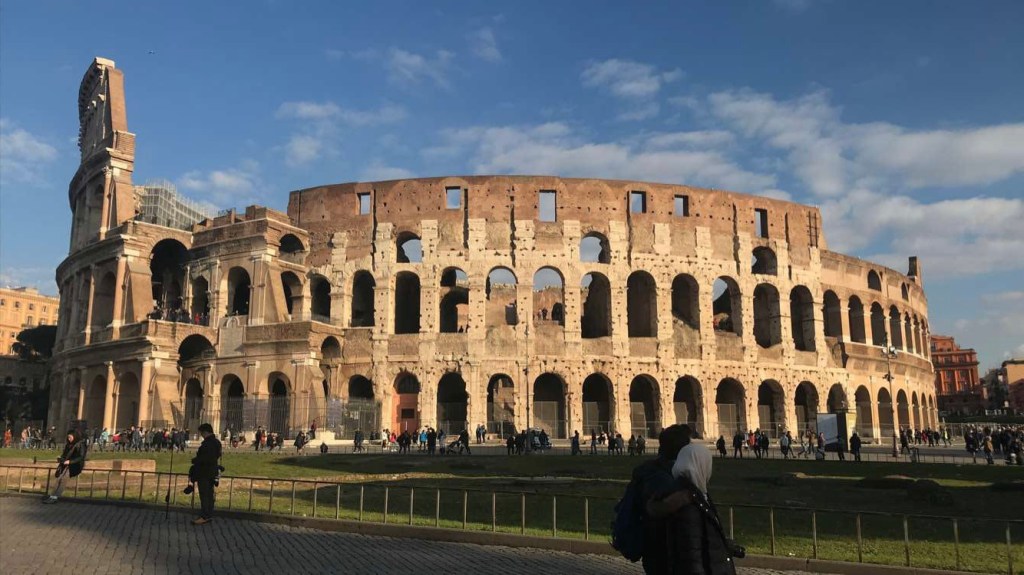
Most people when visiting Rome, wish to see the Colosseum, as wanting to get a greater understanding of the history that it holds. It is what took place here that was considered as entertainment at the time which makes it a dark tourism attraction.
Short History
The Colosseum is over 2000 years old, as is the largest amphitheater ever to be built, the name Favian Amphitheater what the Colosseum was known as come from Flavian Dynasty who built, as well as two semicircles being combined to make an overall theatre, it was constructed in 70-80AD by 100,000 slaves, it was over seen by three different emperors being Flavian Amphitheater who started the construction, then being passed to his soon Titus who took over after his fathers death and then being based to his youngest son Domitian, each adding different aspects to the Colosseum. it was built out of stone which was sourced from Tivoli area and was held together by iron clamps, some of these clamps have been removed as locals used aspects to build other buildings around Rome.
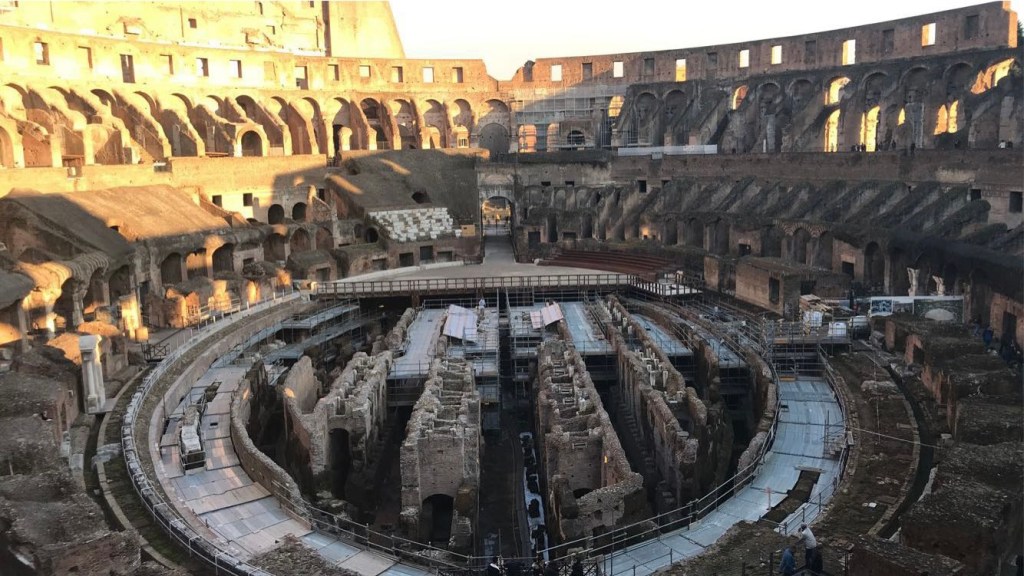
The Colosseum was used for gladiatorial contests, public spectacles, historical re-enactments, mythological theatrical performances and executions, it could hold 50,000 – 80,000 spectators. people who was wealthier was seated closest and the poor people seated at the higher levels, people would have made their way through one of the 80 entrances, each entrance having a Roman numerals above the door which can still be seen today.
The main things that attracted spectators was the gladiator contests, however animal contests was displayed these being of giraffes, lions, bears, crocodiles, elephants. It is estimated that over 9000 animals was killed, this was confirmed through archaeological digs taking placing in the tunnels under the stage floor and finding animal bones.
The colosseum is considered as one of the 7 Wonders of the World and attracting nearly 4 million visitors each year.
Our tour
When first seeing the Roman Colosseum you can understand why it is one of the 7 wonders of the world, the alcohological structure from the outside is a sight to see with in itself. From walking around the outside it gives of a sense of power, makes you think of what people would have thought when making their way to see an event.
The ticket office is located at ground level which is sign posted around the Colosseum, as we went in off peak season being January it was not that busy, and we did not have to cue for very long, you are told a time when the next tour is taking place and told to wait in a specific area for that tour.
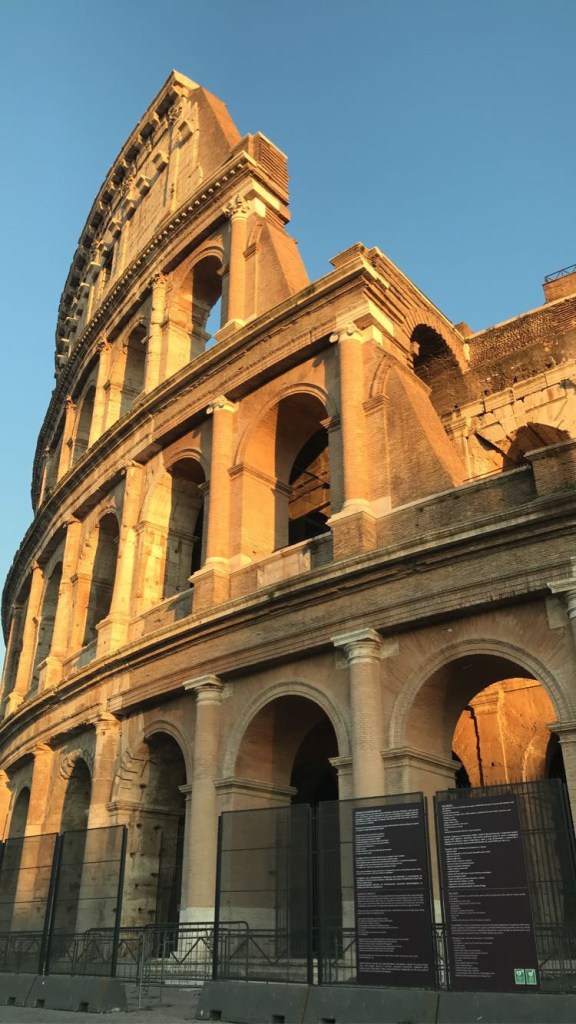
We was with a group of around 20 people, the guide starts by explaining the outside of the Colosseum and the surrounding area, explain living conditions in Rome and what it would been like at the time of the Colosseum era and brief history of the Colosseum such as I have done, please see above. You are then taking up to the up levels of the Colosseum, the level we was on had like a museum display of artefacts linked to the colosseum, the tour guide does explain how the colosseum would have looked through the use of the museum artefacts.
Moving around the colosseum the tour guide does tell you about how it was built along with what sort of events took place their, and explaining the different layers of the colosseum from the tunnels under the stage floor to the upper levels.
You are given time near the end to have a look around and take extra pictures, it is not a very long tour lasting around 1 hour and a half however the information is very informative and gives you a understanding of the colosseums important at that time. Taking a tour of the Colosseum is something I would highly recommend at it is a sight to see but the information being told to you through a tour is very informative and gives you a better understanding what Rome was like.
Santa Francesca Romana
St. Francesca Romana founded the Olivetan Oblates of Mary in 1421, who looked after the poor and sick of woman, She was known for harshly degrading herself with whipping herself with metal chains and burning herself with animal fat, it is said at one point she event drank from a human skull to ward off the devil.
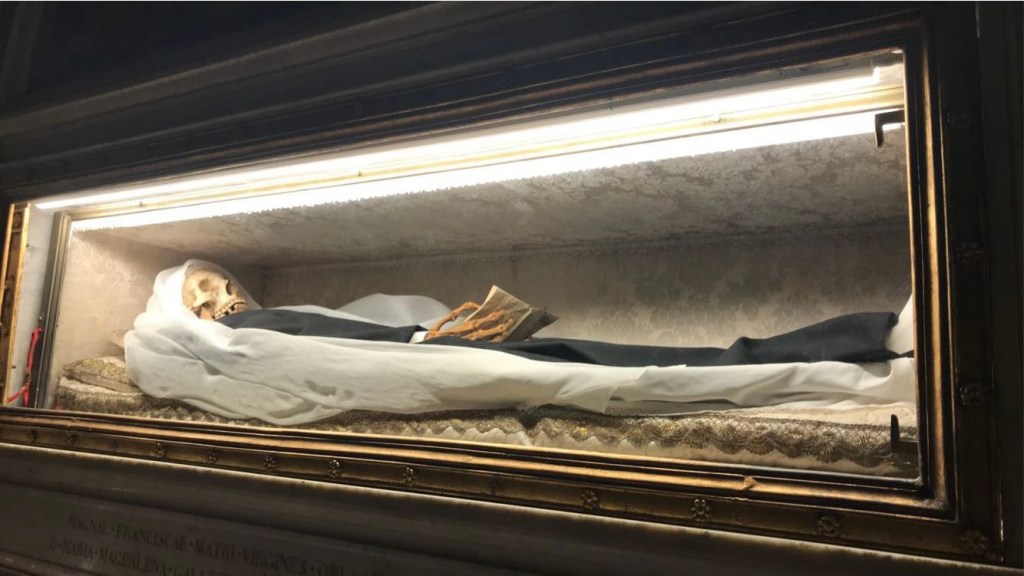
Santa Francesca Romana church is said to be the site of where Simon Mugus used black magic to fly, however Peter and Paul the apostles prayed he would fall, when god granted them their wish he fell and broke both his legs and was stoned to death, the church is said to be the only surviving example of Christian intervention.
The church is a short walk from the colosseum, turn right when walking towards the Colosseum and go up the ramp, however when entering the church you will need to make your way to near the back of the church and go down the steps where you will find Santa Francesca Romana, she is placed behind glass inside the wall, you able to leave pray notes in a book that is located under her, we made this trip after going to the Colosseum.
St Valentines Skull
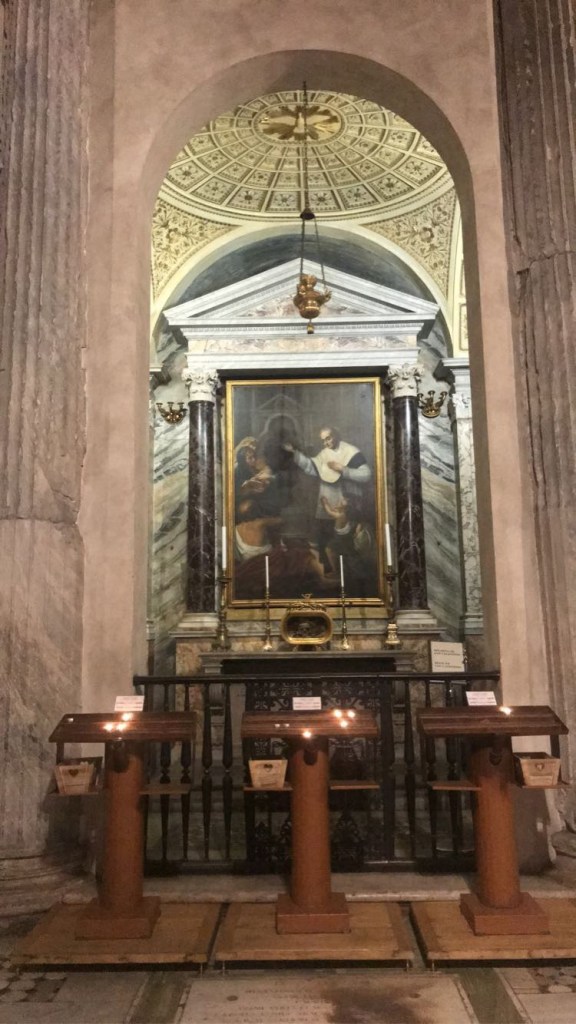
The Pantron saint of love is located Basilica di Santa Maria in Cosmedin, it is still complex in understanding who actual skull it is as their is more that one Catholic saint known as Valentine, their is 10 places said to house the saints relics however 2 saints of Valentine are said to have lived in Italy in 3rd century.
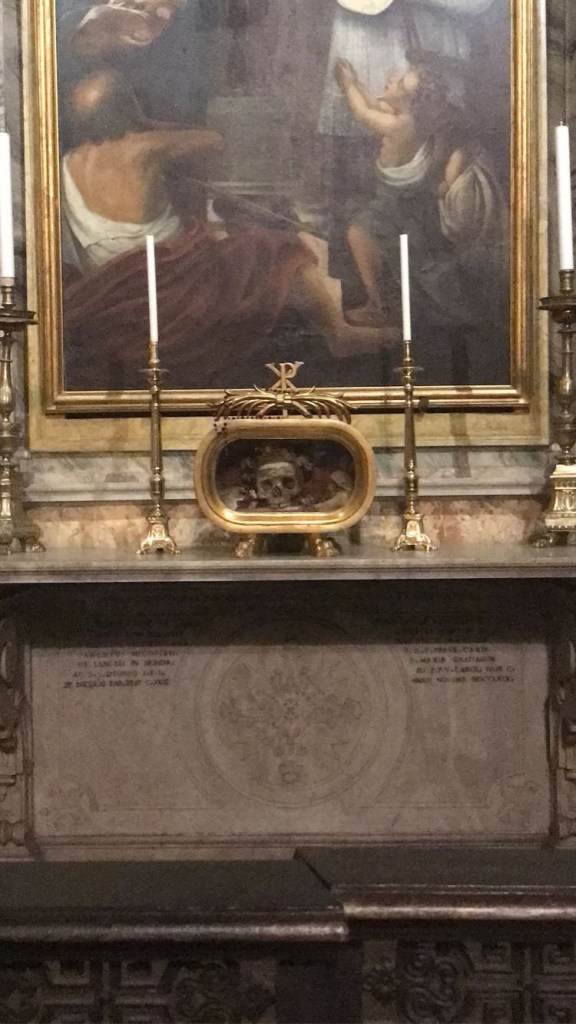
The Basilica di Santa Maria in Cosmedin sits on the same site of where an ancient Roman temple sat dating back to the 2nd century. The skull is located to the side of the altar to the left, you will notice in a small golden box. When visiting the Mouth of truth that is located just outside, you can by base this que by going to the right where the line ends inside and their is door to enter the church.
Saint Valentine skull is is a little walk from the colosseum around 30-45 minutes however their is sightseeing bus at the back of the colosseum that can be used to take you their.
The Pantheon Rome
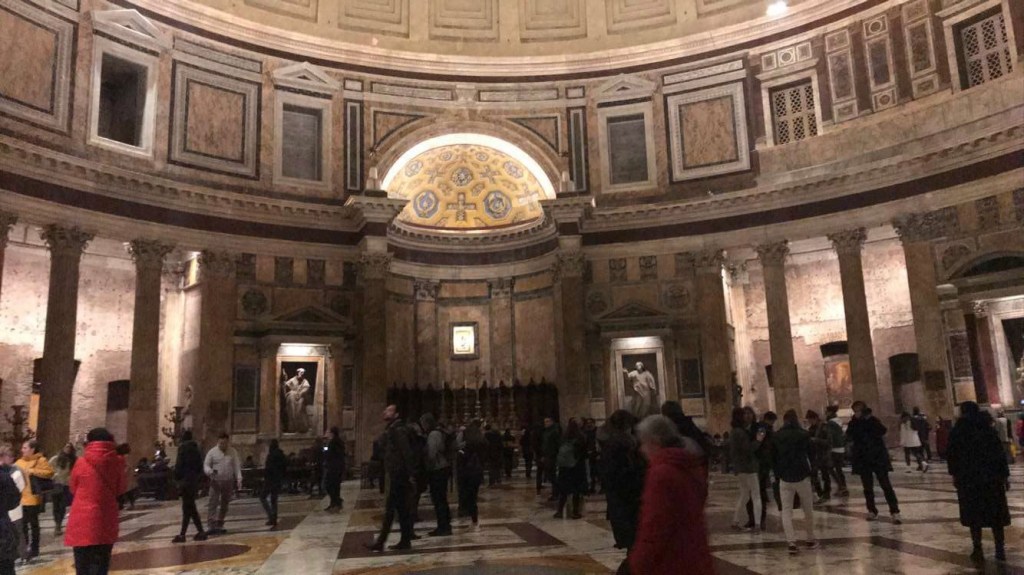
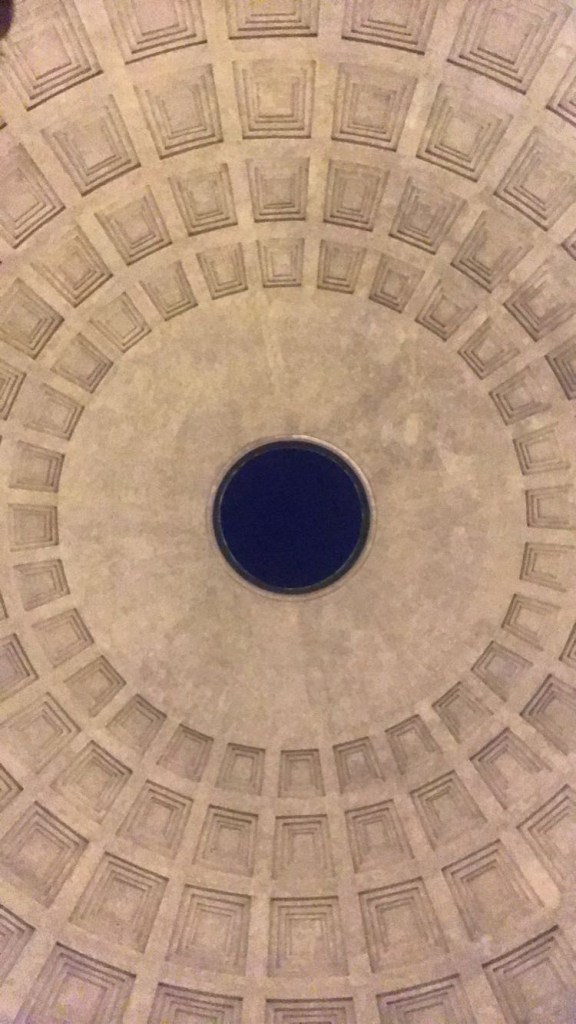
The Pantheon is and outstanding building, their not much to take in however the design shows the extraordinary workmanship that went into building this building, When arriving at the Pantheon it is very hard to see the thought that went into building the Pantheon to you are inside.
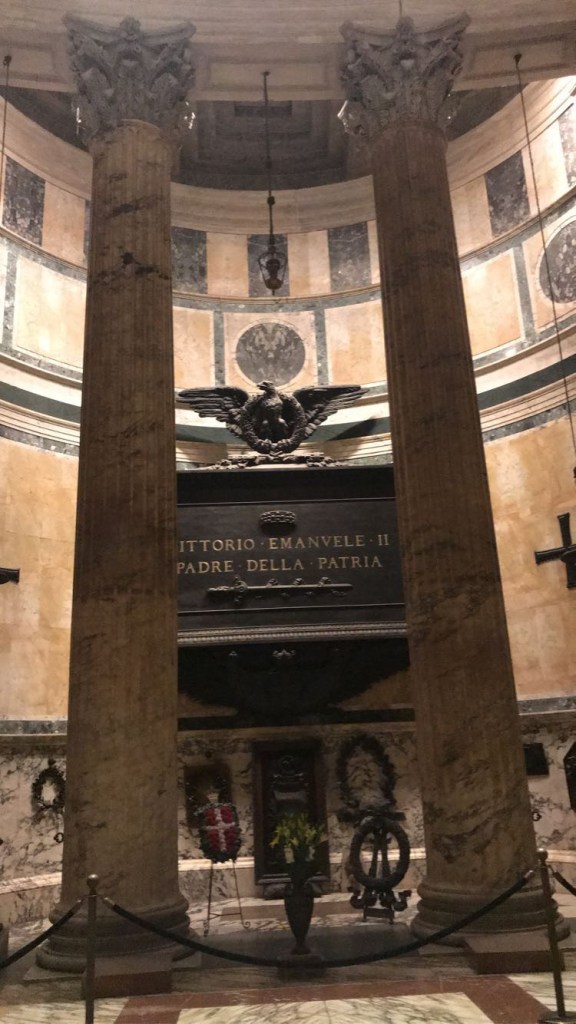
When you are inside you can see the craftsmanship, you walk into around room with an domed celling, however within the centre of the dome they is a circle that allows natural light through, it also allows rain to come through, however the floor does have drainage system what is hard to see as their is small wholes about the size of a pound that the rain runs into. Going out from the circle pint of the dome they is sunken square panelling, the dome is then held above by granite columns behind these there are a number of Tombs some of these being Raphael’s Tomb, Tomb of Victor Emmanuel II, Tomb of Umberto I.
Short history
The Pantheon Rome was completed around 126 A.D to 128 A.D, however it was erected on a site with the same name, which was built around 25 A.D. however was later destroyed in a fire in 80AD and then rebuilt but met the same fatal ending of being burned down in 110 A.D. Marcus Agrippa is known to have built the first one and the Emperor Domitian over saw 2nd one.
looking at the present day Pantheon, little is known, it is possible that construction of the present day Pantheon was over seen by Hadrian’s predecessor, Trajan, who served as emperor from 98 to 117.
Saint Maria della Concezione Crypts
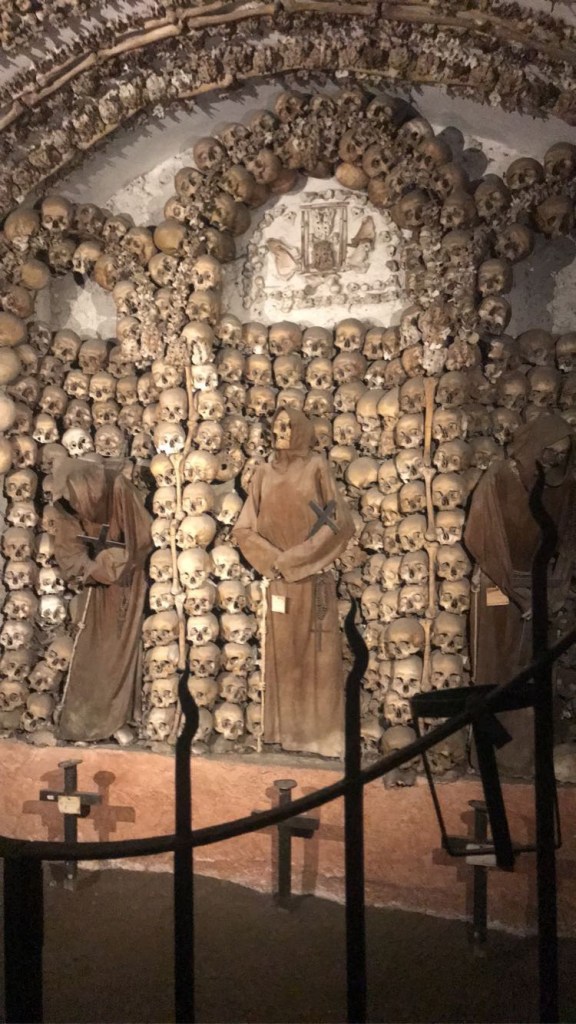
The crypt is probably one of the lesser known attractions when visiting Rome, but it is definitely worth a visit and sure not to disappoint. It is not far from the Trevi Fountain.
We arrived at Santa Maria della Concezione dei Cappuccini, their is to stairs leading up to the church however walking to the left of the building is where the crypt is located. You have to pay an admission fee, you are given a head set that will take you through the museum part. The museum houses different artefacts linked to religion and the church.
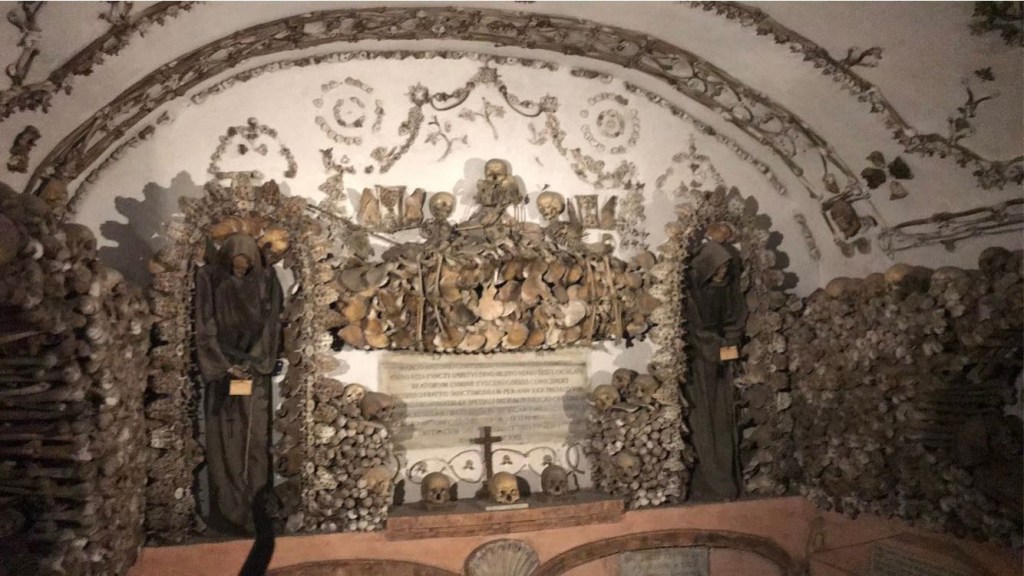
Before you enter the crypt you a greeted with images of the bones, following the walk way around, you will find that the is a security standing along the corridor which the 5 under coves run next too, each section has a iron fence in front of them so you not able to get up close to the bones, we was lucky that security walked away to take pictures, however other people had been told they was not allowed to take any photos.
Some of the monks with in the macabre art work are placed to look like they are resting, with skulls being places around them to form arch ways, along the floor their has been people buried and above on the celling their have been decorated with smaller bone fragments. At the end you are taken into a gift shop, if wishing to buy any books or souvenirs.
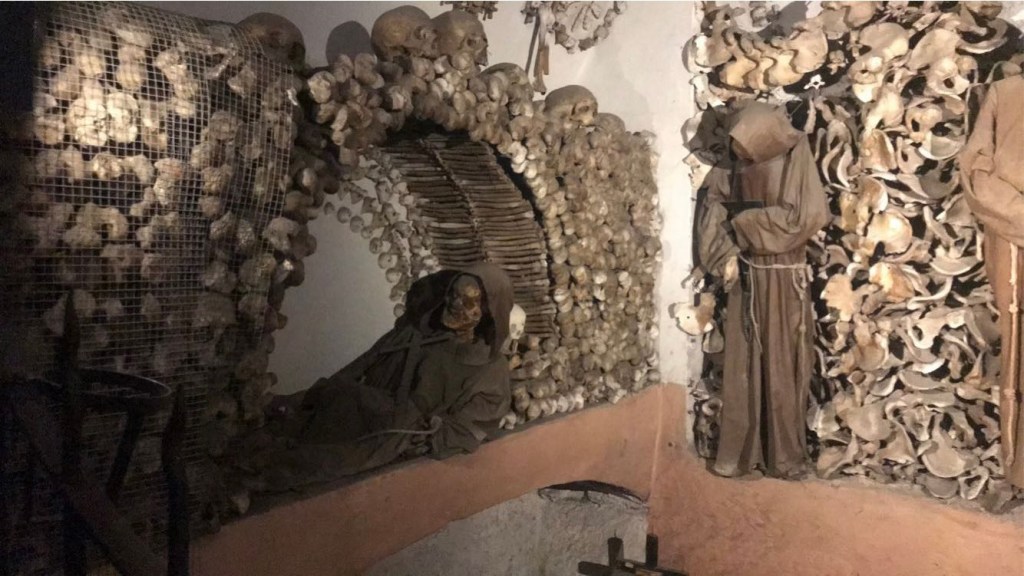
I can see some similarities like the celling’s to the The Sedlec Ossuary is Czech Republic, however from this Crypt you get much more of a religious feel this maybe because of monks, and you have to be more respectful.
Short history
The Crypt is located under the church Santa Maria della Concezione dei Cappuccini. Cardinal Antonio Barberini ( Popes brother) in 1631 commanded the remains of thousands of Capuchin friars transferred from the friary Via dei Lucchesi to the crypt.
The bone have intricately been arranged in five different individual chapels that are more like under coves, some skeletons being monks have been left intact with their friar’s clothes on giving a mummified appearance, from friars burying their dead their and bodies of poor Romans being buries between 1500 – 1870 it now houses 4000 remains.
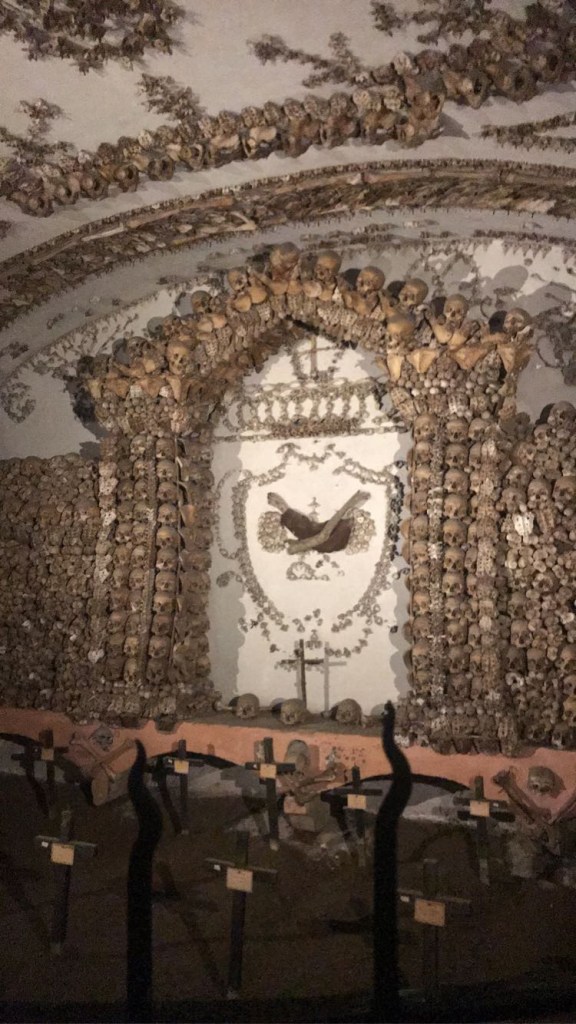
The Saint Maria della Concezione Crypt is said to have got its inspiration from The Sedlec Ossuary is Czech Republic and the Skull Chapel in Poland
 Dark Tourism Destinations